
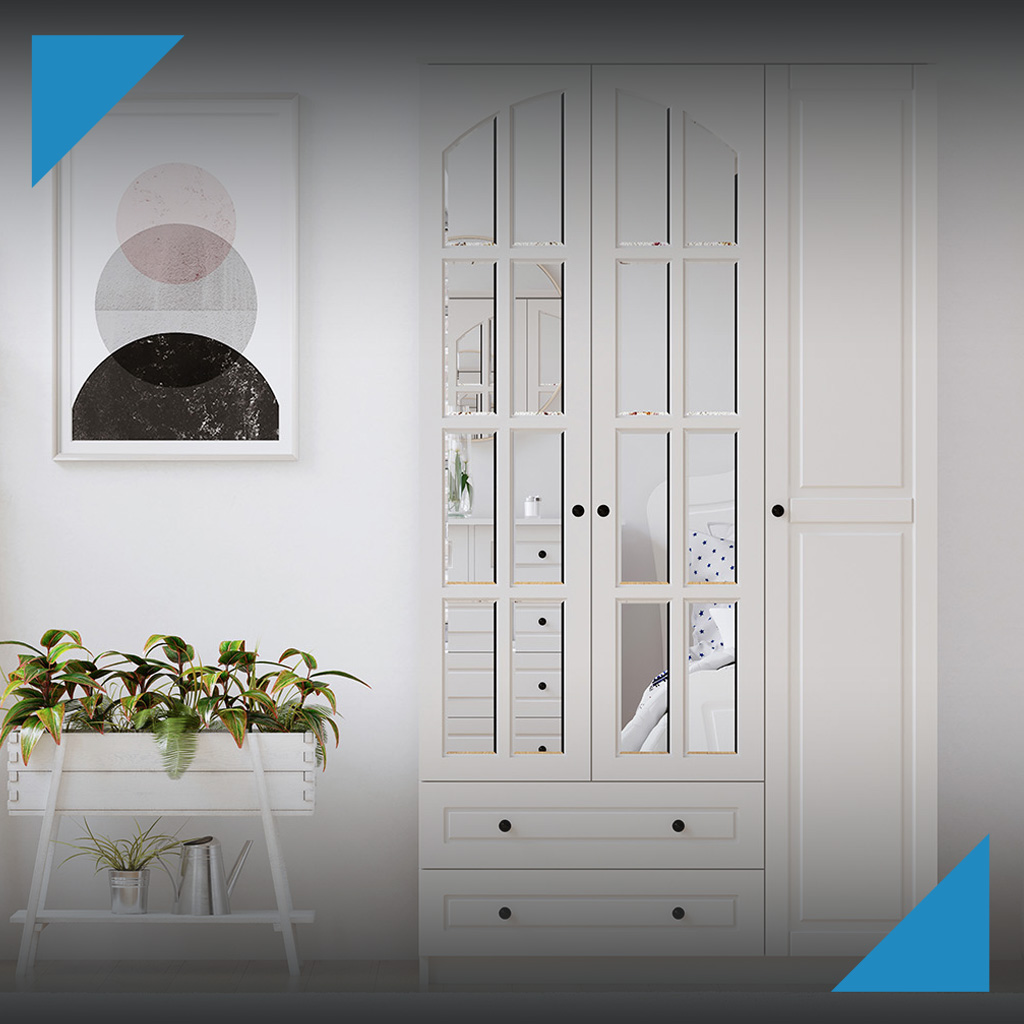
Wardrobe Selection Guide: Dimensions, Door Style, Interior Organization, and Materials
Wardrobe Selection Guide
The wardrobe is the "most used" furniture in the bedroom. A wrong choice means a narrowed space, clashing doors, disorganization, and a short lifespan. The right choice, however, makes life easier every day: a more spacious room, more organized use, and a mechanism that works flawlessly for years.
In this guide, we clarify the wardrobe selection in 4 steps: measurement → door type → interior layout → material & workmanship.
1) Measure first: How to take the most accurate wardrobe measurements?
Choosing a wardrobe "by eye" is the most common mistake. To take accurate measurements:
Get the room measurements right
-
Measure the width of the wall where the wardrobe will be placed.
-
Measure the ceiling height (critical especially for tall cabinets).
-
Check if there are obstacles like sockets, radiators, or skirting boards in the corner of the wall.
Account for the door opening clearance
-
A hinged door requires space in front to open.
-
If your room is narrow, the door might clash with the nightstand/door/bed when opened.
Leave a walkway inside the room
Leave a passage line suitable for daily use in front of the wardrobe. This is essential for the dressing area, drawer opening, and access inside the cabinet.
Quick tip: In narrow rooms, if you don't want the hassle of "opening doors" in front of the wardrobe, sliding options work more comfortably.
2) Sliding or hinged? How to choose the right door type?
This choice is actually made according to the room plan.
When is a sliding wardrobe the right choice?
-
If the room is narrow and the walkway is limited
-
If there is no door opening space in front of the wardrobe
-
If a more "flat surface" and modern look is desired
Pros: Saves space, provides an organized facade appearance.
Caution: The quality of the rail system is essential; otherwise, it can cause noise and strain over time.
When is a hinged wardrobe the right choice?
-
If the room is spacious
-
If you want to access the entire cabinet at the same time
-
If you want to use the interior layout by "seeing it more comfortably"
Pros: Access to all compartments in one move, more classic ease of use.
Caution: Space is required for opening the doors.
3) Interior layout plan: How should the hanger-shelf-drawer distribution be?
A wardrobe looks nice from the outside; but the true comfort is determined by its interior layout.
Plan according to your own usage style
-
If you mostly have work clothes/shirts: hanging space is a priority
-
If you mostly have sweaters/t-shirts: shelf space is a priority
-
If you want accessory/underwear organization: drawers are essential
Don't forget the seasonal storage space
A top shelf/top section plan is important for bulky items like suitcases, quilts, and seasonal coats.
Number of drawers = organization
Small items used daily (socks, belts, underwear) provide quick organization in a drawer.
4) Material and workmanship: Critical points for longevity
The wardrobe is the furniture that takes the most load with daily opening and closing. The details that determine durability:
-
Rail/hinge quality: Silent operation, long life
-
Connection and body strength: Reduces wobbling and misalignment
-
Edge banding and surface coating: Impact/scratch resistance
-
Assembly quality: Door adjustment, drawer alignment, and stability
Rabifurniture Quick Checklist (Save, use while shopping)
-
Measurements taken (width + height + obstacles)
-
Door type is suitable for the room plan
-
Hanger/shelf/drawer ratio is suitable for the lifestyle
-
Seasonal space considered
-
Mechanism quality checked
-
Assembly and service process is clear
FAQ (Frequently Asked Questions)
Q: Which wardrobe is better in a narrow room?
A: Usually, a sliding wardrobe provides a more spacious use; it does not need door opening space.
Q: Can I change the interior layout of the wardrobe later?
A: Adding/removing shelves is possible in some models; interior modularity should be asked before choosing.
Q: How many doors are ideal?
A: It varies depending on the room width and usage habits. What matters is the interior access and opening space.
